Car Brake Repair Services in Broken Arrow, OK
At Transmission Clinics, we diagnose and repair complete automotive brake systems from initial inspection through component replacement and hydraulic rebuilds. Our car brake repair services address every part of your vehicle’s braking system, including brake pads, rotors, drums, shoes, master cylinders, wheel cylinders, brake lines, hoses, power boosters, ABS components, and emergency brake.
We test brake performance hydraulically, electrically, and mechanically.
Complete Brake Inspection and Brake Repair Services
With our car brake services, you receive complete brake system diagnostics, brake pad and lining replacement, rotor repair and replacement, brake drum and shoe services, master cylinder and wheel cylinder repair, brake hose and line replacement, emergency and parking brake repair, and power booster repair.
Our automotive repair process for brakes starts with understanding symptoms and ends with component replacement only after confirming which parts have failed.
Full Brake System Diagnostics
We perform full diagnostics by inspecting electrical, hydraulic, and mechanical components to identify why your brakes aren’t performing correctly. These diagnostics test how all brake components work together to stop your vehicle.
Our diagnostics include:
- Old brake fluid check
- Brake pedal feel assessment
- Hydraulic pressure testing
- Electrical diagnostics covering ABS sensors, modules, and warning lights
- Mechanical inspection measuring pad thickness and rotor condition
- Caliper operation checks for piston movement
This reveals whether your brake problem is fluid-related, pressure-related, component wear, or electrical before we recommend specific repairs.
Brake Pad and Lining Replacement
We replace worn brake pads and linings with new brake pads when the older ones are contaminated or cracked. Brake pads are the friction material that presses against rotors to stop your vehicle.
We offer semi-metallic pads for high-performance and heavy-duty applications and ceramic pads for quieter operation and less brake dust.
Brake pad replacement services include:
- Inspecting caliper hardware for wear and damage
- Cleaning and lubricating slide pins
- Checking caliper piston condition
- Installing anti-rattle clips and shims
- Bedding new pads
We measure pad thickness at every brake inspection and recommend replacement before pads reach the backing plate because metal-on-metal contact damages rotors and increases repair costs significantly.
Rotor Repair and Replacement
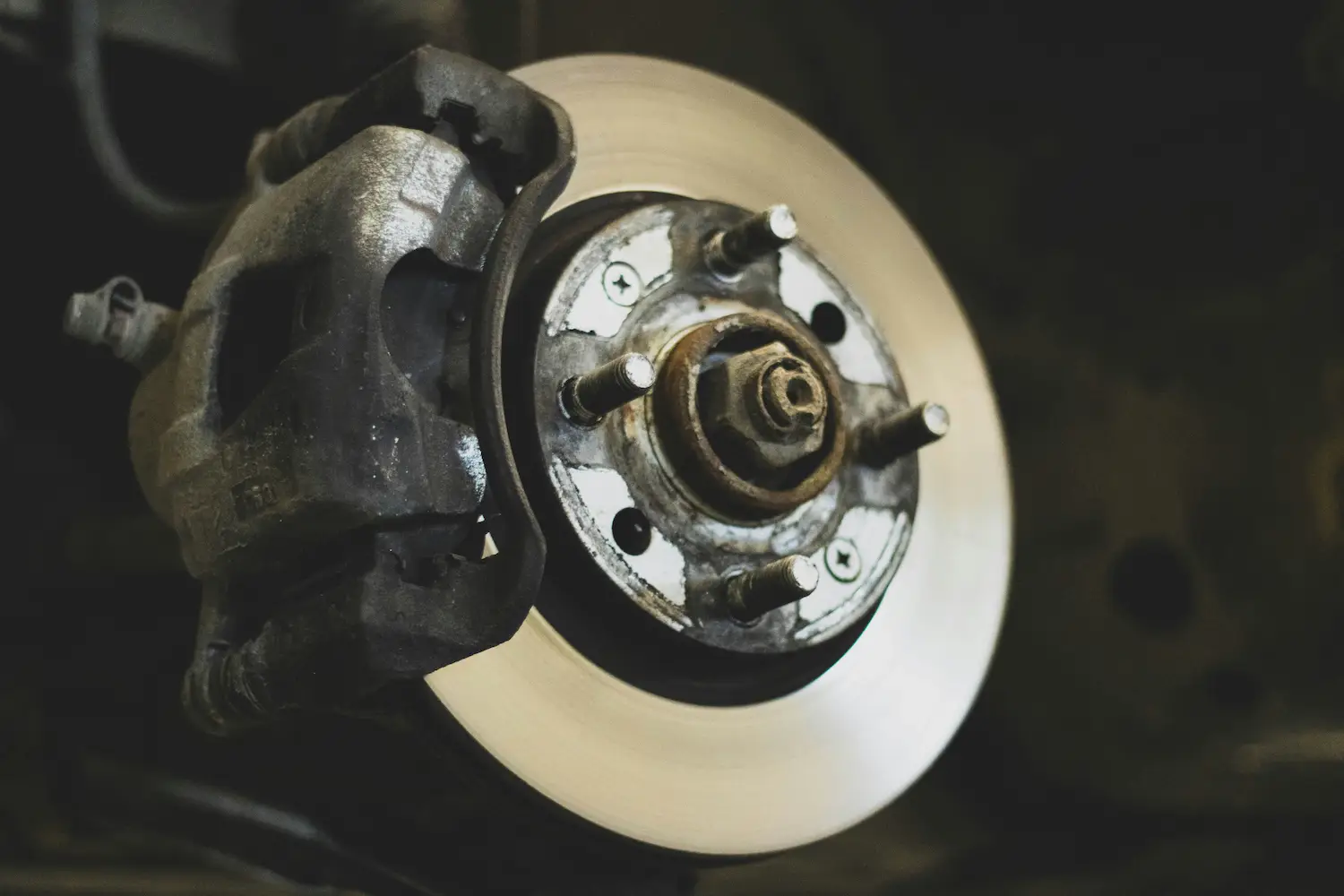
We repair or replace brake rotors based on thickness measurements, surface condition, and runout specifications. Rotors are the metal discs your brake pads clamp against to create stopping force. After confirming pads are worn or contaminated, we inspect rotors because pad problems often damage rotor surfaces.
If there are minor surface irregularities but still meet minimum thickness specifications, we machine or resurface rotors. The machining removes a thin layer of metal to create a smooth, flat braking surface.
We replace rotors when:
- Thickness is below manufacturer minimum specification
- Deep cracks are present
- Heat damage has warped the rotor beyond machining limits
- Previous machining left insufficient material for safe use
New or resurfaced rotors must be paired with proper pad bedding to achieve full braking performance.
Brake Drum and Shoe Services
For cars that have drum brakes in the rear, we check all the parts that help your car stop. We look inside the brake drum to make sure it’s not worn out, and we check the brake shoes to see if they still have enough material left. We also make sure the springs that pull everything back into place are still strong.
If the brake drum is still in good shape but the surface is rough or uneven, we smooth it out — this is called drum machining (resurfacing the drum).
Overall, we just make sure all the rear brake parts are safe, clean, and working properly.
Brake drum services include:
- Measuring drum inside diameter for out-of-round condition
- Machining drums that meet minimum diameter specs
- Replacing drums worn beyond maximum diameter
Brake shoe services include:
- Replacing shoe linings when below minimum thickness
- Installing new return springs and hold-down hardware
- Adjusting shoe-to-drum clearance
- Cleaning and lubricating backing plates
Drum brakes require proper adjustment after shoe replacement to prevent excessive pedal travel.
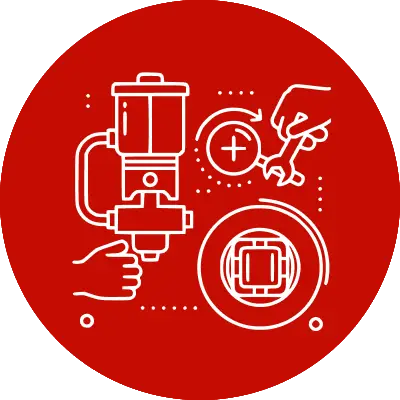
Master Cylinder and Wheel Cylinder Repair
Your brakes work by using fluid pressure. The master cylinder (the main fluid pump) and the wheel cylinders (small cylinders at the wheels) help create that pressure.
We check these parts when we notice signs of leaks or pressure loss during tests. If the master cylinder or a wheel cylinder is leaking inside or outside, it can cause problems like a soft brake pedal or the pedal slowly sinking when you hold it down.
If we suspect an issue, we do a pressure test to see if the master cylinder can hold pressure the way it should. If it can’t, or if fluid is leaking into other parts, we repair or replace the part.
We also check the brake fluid condition. Old or contaminated brake fluid can cause spongy brakes and reduce power, so we perform a full brake fluid exchange to keep the hydraulic system working like it should.
Master cylinder services include:
- Pressure testing
- Inspecting for external leaks
- Testing proportioning valve operation (if integrated)
- Bench bleeding (removing air) new master cylinders
Wheel cylinders operate brake shoes in drum brakes. Failed wheel cylinders leak fluid onto brake shoes, reducing braking force.
Wheel cylinder services include:
- Inspecting for leaks behind brake drums
- Replacing leaking cylinders
- Bleeding air from the wheel cylinder after replacement
Both master cylinder and wheel cylinder repairs require brake bleeding to remove all air from hydraulic lines.
If there are minor surface irregularities but still meet minimum thickness specifications, we machine or resurface rotors. The machining removes a thin layer of metal to create a smooth, flat braking surface.
We replace rotors when:
- Thickness is below manufacturer minimum specification
- Deep cracks are present
- Heat damage has warped the rotor beyond machining limits
- Previous machining left insufficient material for safe use
New or resurfaced rotors must be paired with proper pad bedding to achieve full braking performance.
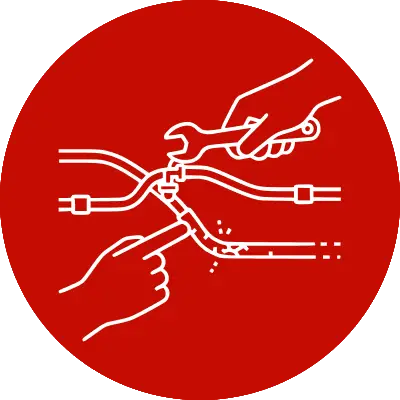
Brake Hose and Line Replacement
Your car uses brake hoses (flexible rubber lines) and brake lines (rigid metal lines) to carry brake fluid to each wheel. If any of them leak or get damaged, your brakes lose power. So after inspecting and confirming the main brake components are holding pressure, we check all hoses and lines for wear, cracks, rust, or leaks.
Flexible brake hoses (rubber hoses) connect the solid lines to your suspension, so they move and wear out over time.
When needed, replacement includes:
- Checking hoses for cracks, bulges, or leaking fluid
- Replacing worn hoses before they fail
- Using DOT-approved hoses (safety-rated) that match your vehicle
- Bleeding the brake system afterward to remove air and restore pedal feel
Hard brake lines (metal lines) run along the frame of the vehicle and can rust or get damaged by road debris.
Hard line repairs include:
- Making new lines that follow the original path
- Using corrosion-resistant materials
- Properly flaring the ends for leak-free connections
- Pressure-testing the repaired section
After any hose or line work, we bleed the system again and make sure the brake pedal feels firm and safe before returning your vehicle.
If the brake drum is still in good shape but the surface is rough or uneven, we smooth it out — this is called drum machining (resurfacing the drum).
Overall, we just make sure all the rear brake parts are safe, clean, and working properly.
Brake drum services include:
- Measuring drum inside diameter for out-of-round condition
- Machining drums that meet minimum diameter specs
- Replacing drums worn beyond maximum diameter
Brake shoe services include:
- Replacing shoe linings when below minimum thickness
- Installing new return springs and hold-down hardware
- Adjusting shoe-to-drum clearance
- Cleaning and lubricating backing plates
Drum brakes require proper adjustment after shoe replacement to prevent excessive pedal travel.
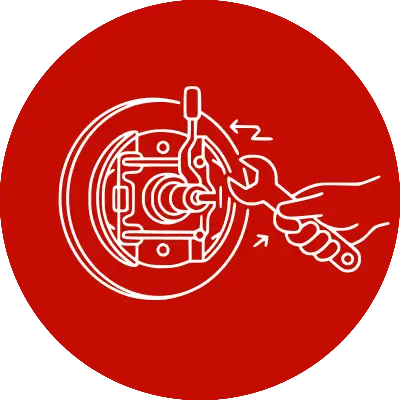
Emergency or Parking Brake Repair
If your parking brake (also called the emergency brake) won’t hold the car on a hill or it doesn’t release properly, it needs service. Since the parking brake uses some of the same rear brake parts, we test it after any rear brake work.
Parking brakes can be cable-operated or electronic, and each type has different needs.
Cable-operated parking brakes (traditional hand lever or foot pedal) can stretch, rust, or get stuck over time.
Cable-operated brake service may include:
- Adjusting the cable so the brake holds properly
- Replacing stretched or damaged cables
- Lubricating the cables
- Servicing the hand lever or foot pedal mechanism
Electronic parking brakes (EPB – button-activated) use small electric motors to apply the brakes. If there’s a warning light, the system needs diagnostics.
EPB service may include:
- Scanning the EPB system for trouble codes
- Testing the parking brake switch
- Checking the motors at each rear caliper
- Calibrating the system after brake work
E-brake performance also depends on the rear brakes being properly adjusted, so we check that as well.
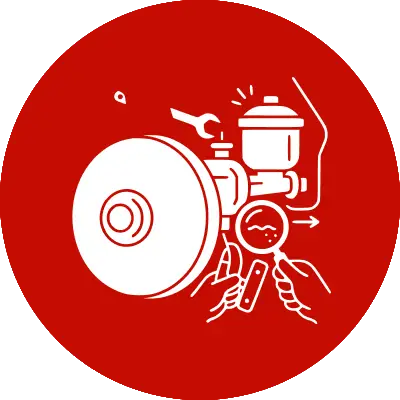
Power Booster Repair
The power brake booster uses engine vacuum to help you press the brake pedal with less effort. We repair power brake boosters when the pedal feels very hard, you hear a hissing sound, or stopping takes more effort because that’s when the booster may be failing.
Booster issues usually happen when internal parts tear or leak, causing a loss of vacuum assist.
Power Booster Services:
- Testing for vacuum leaks, ensuring the booster holds vacuum
- Checking the check valve (prevents vacuum loss when the engine shuts off)
- Measuring pedal effort, confirming booster is helping
- Replacing the entire booster if damaged inside
Power brake booster replacement involves removing it from the firewall, moving the master cylinder out of the way, and bleeding the system afterward.
We also check all vacuum lines and mounting points to ensure everything is sealed and secure before the final brake test.
Signs You Need Brake Repair
Squeaking or Squealing Brakes
This usually means your brake pads are getting low or there’s dust or glazing on the pads.
Common signs:
- High-pitched noise during light braking
- Noise that goes away when pressing harder
- Squeal coming from one or both front wheels
Grinding or Metal-on-Metal Sounds
This means the brake pads are worn out and metal is grinding on metal.
Common signs:
- Loud grinding sound when braking
- Reduced stopping power
- Visible damage or grooves on the rotors
Vehicle Pulling When Braking
The car pulling to one side means one brake is working harder than the other.
Common signs:
- Car drifts left or right during braking
- Uneven pad wear
- Burning smell on one side after braking
Soft, Spongy, or Low Brake Pedal
This means there’s air or a leak in the brake system and the pedal can’t build pressure.
Common signs:
- Pedal feels soft or mushy
- Pedal sinks toward the floor
- Longer stopping distance
Vibrations When Braking
This usually comes from warped rotors or loose brake components.
Common signs:
- Pulsing feeling in the brake pedal
- Steering wheel vibration
- Shaking that gets worse at higher speeds
Burning Smell After Driving
A sharp, burning odor means a brake is overheating or sticking.
Common signs:
- Hot, chemical smell after stopping
- One wheel extremely hot to the touch
- Reduced braking performance
ABS Warning Light Coming On
This means the anti-lock brake system has a problem and has shut itself off.
Common signs:
- ABS light stays on
- Intermittent ABS activation
- Loss of anti-lock function on slippery roads
Why Choose Transmission Clinics for Your Car Brake Needs?
Transmission Clinics has been serving Broken Arrow and greater Tulsa since 1988. While we’re known for our expertise in transmissions, we also specialize in automotive brake replacement and repair jobs.
Here’s why locals continue to trust us with their vehicles year after year:
-
- Certified Technicians – Our technicians are certified and trained in the latest car braking systems. We use advanced equipment to effectively diagnose brake problems and fix them the first time.
- 100,000-Mile Warranty – Comprehensive local and nationwide coverage on major parts.
- Same-Day Service Available – Same-day general auto repair and general maintenance services.
- Free Estimates: We provide free, in-person estimates specifically for transmission work. Please note that while we are happy to assess your transmission needs at no cost, this complimentary service does not extend to full automotive inspections.
- Financing Options: We proudly offer flexible financing options through Klarna, allowing you to pay over time for your repair.
- All Makes & Models – Domestic (Ford, Chevy, Dodge), Import (Honda, Toyota, Nissan), and Luxury (BMW, Mercedes, Audi, Lexus).
- Locally Owned – We’re your neighbors in Broken Arrow, serving Coweta and Wagoner.
- Comprehensive Automotive Service: We are a full-service auto care center, capable of handling everything from minor maintenance to major repairs.
- Quality Parts & Service: We use high-quality parts, backed by warranty, and follow industry-best practices to ensure the longevity of our repairs.
- Customer-Focused: We believe in transparent communication and honest recommendations, putting your safety and satisfaction first.
We are Your Local Auto Brake Service Repair Specialists Near Broken Arrow
If you’re anywhere near Broken Arrow, searching for “car brake services near me”, you’ve found the right place. Contact us today to schedule a professional diagnostic and service. Our expert brake technicians will inspect your vehicle and let you know what exactly needs to be adjusted. Sometimes a simple maintenance job can make a big difference in long-term brake performance.
Frequently Asked Questions About Car Brake Systems
How much does a brake service usually cost?
A standard brake service, such as replacing pads on an axle, can cost anywhere from $150-$300. Full brake job replacing components on all four wheels could range from $600 to over $1,200.
What are the first signs of worn rotors?
Signs of worn brake rotors include vibration or pulsing in the brake pedal or steering wheel, unusual sounds like squealing or grinding, longer stopping distances, and visible damage to the rotor’s surface such as deep grooves or cracks.
Can I drive with worn brake pads?
No. It reduces braking force, which is dangerous and can lead to accidents. In addition, it damages your rotors and other parts of the vehicle, resulting in costly repairs. For example, a $250 brake pad replacement on a single axle can easily exceed $400 if metal-on-metal grinding occurs.
How long do brakes typically last?
Brake pads last 30,000-70,000 miles depending on driving, environment, and brake type.
How do I check brake pads?
Look through wheel spokes using a flashlight and measure with a vernier caliper or a ruler. If the measurement is less than 3mm, the pads must be replaced immediately. Additionally, if pad material is thinner than the backing plate, they’re severely worn and need immediate replacement.
What's included in your free brake inspection?
Our free brake inspection typically includes a visual check of components like pads, rotors, and fluid, along with a test drive to assess performance and a check of lines, hoses, and the master cylinder.
Why is hydraulic pressure important in a brake system?
Hydraulic pressure multiplies your foot pressure into up to 1200 psi, which means only a small force on the pedal can generate enough stopping power to safely halt a heavy vehicle.
Why is the ABS system important for safe braking?
ABS prevents wheels from locking up, which allows you to maintain steering control and stability during hard braking, especially on slippery surfaces.
Serving Broken Arrow and Surrounding Areas
We are proudly located in Broken Arrow and extend our honest, dependable service to clients throughout the surrounding areas, including Coweta and Wagoner.
Our Broken Arrow location:
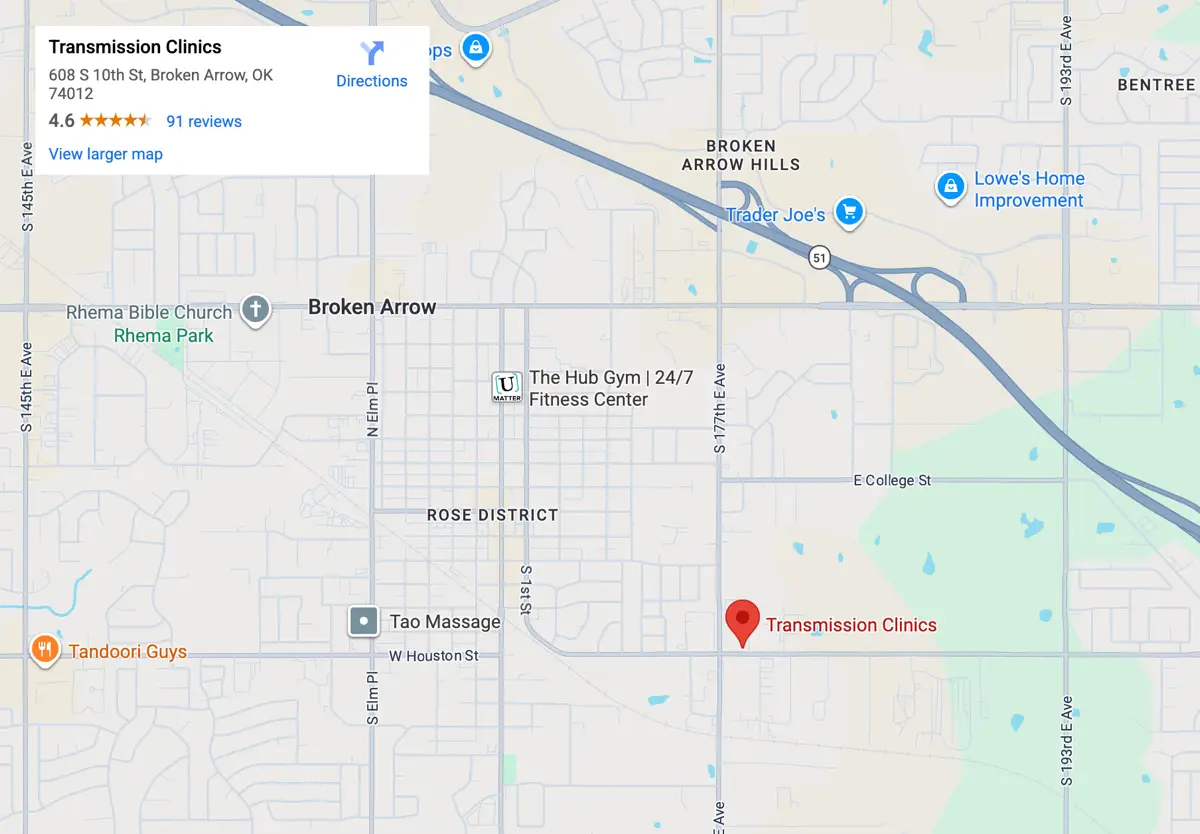
608 S 10th St., Broken Arrow, OK 74012
(one block east of Lynn Lane (E. 177th) off of 81st Street.)